

High School Students Create Startups: Teaching Design Through Entrepreneurship
Melanie Kong, Nikola Tesla STEM High School
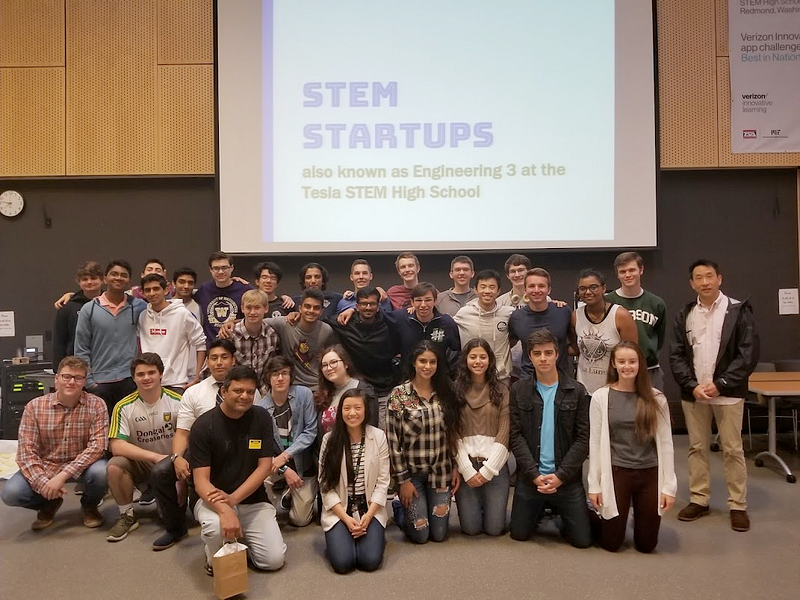
When students walk into my classroom on the first day of school, they see a slide with this quote:
“The people who are crazy enough to think that they can change the world are the ones who do.” — Steve Jobs
I open the year with this quote because it taps into students’ optimism. It reminds them that they all want to make a positive impact in this world, and that they will — this year.
I also open with this quote when I’m talking to educators. As educators, we are the next level of crazy. We not only believe that we can change the world, but we believe — know — that our students will change the world. It’s just a matter of when, and more importantly, how.
So, what if students learned how change the world in an empathic and ethical way? Unlocking students’ agency to impact their world, and helping them navigate how to do so through design thinking, is what drives me as an entrepreneurship and engineering educator.
As a Product Engineer turned Engineering Educator, I believed in teaching a design process as part of Engineering. In my Engineering class, students applied a design process that started with identifying and understanding customer needs before generating lots of ideas and prototyping, testing, and refining a solution. However, my biggest challenge was motivating student curiosity about their customers.
Then, when I attended a 3-day startup hackathon, and I conducted a dozen customer interviews to validate the problem I was solving, I realized that startups were a powerful context for applying design thinking. My experience creating a startup during that 3-day event, as well as my continued development of my startup Floop, inspired my creation of the startups course.
Introducing STEM Startups
At the Tesla STEM High School in Redmond, WA, students change the world by creating startups. Through this year-long course, they learn human-centered design and empathy, wrapped up with engineering, business, and entrepreneurship. While designing for specific customers, they are exposed to authentic design frameworks and tools that help them create better products and businesses. And, every step of the way, they engage with industry partners as speakers, facilitators, mentors, and judges.
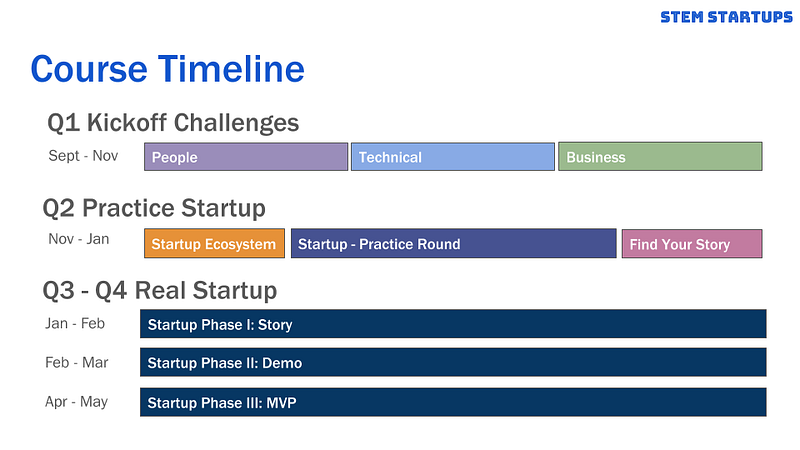
For the initial kickoff, students complete fast design challenges focusing on each component of successful startups (business, people, technical) to develop targeted skills and to understand their classmates’ skills and work styles.
Students then put those components together for a complete and fast-paced practice round creating a startup. Along the way, they grow their ecosystem through networking and find the perfect story and team for their real startup.
After their practice startup, students form new teams and select a problem that they tackle for the rest of the year. Each startup phase carries them further in their execution of their startup, culminating in Demo Day at the end of the school year, where they present their pitch in front of an external panel of entrepreneurs and investors.
Behind STEM Startups: Course Design Principles
The course is designed with 5 main principles: experiential learning, student voice, iteration, authenticity, and industry connections.
1. Experiential learning
100% of the course involves learning by doing. After students go through an experience, they reflect on the experience, conceptualize the material, and then continue to experiment and learn with the material.
For example, students tackled the $5 Challenge (courtesy of Tina Seelig) during our business challenge: With $5 and 2 hours, make as much money as possible. Students competed with each other during a hectic few days setting up hot chocolate stands, selling brownies, and starting ping pong tournaments. After they reflected on the experience (“I learned that knowing your market is key to selling a product or service to them”), we introduced the Business Model Canvas as a way for them to think about all aspects of their business. They then mapped out a new business idea and tried the challenge again.
So, experiential learning means experience first — frameworks later.
2. Student voice
Throughout the course, students decide what they want to work on and how they want to solve problems. Because of this strong element of student choice, students often are surprised to learn what they are capable of. One student said:
“I was surprised to see myself taking the lead in a lot of the group. It really felt like it was more about me being invested in the project instead of me finishing the project. It became personal. To be honest, that’s the first time in school I actually wanted to work on something myself. It was MY project, and not a school project.”
I also solicit student voice to design the course with me. When students designed our semester exam, they decided that they wanted to practice their teamwork through hands-on challenges and speed networking. Hearing students’ honest feedback and opinions requires that I make the classroom a safe place for them. One way I do that is through my crazy grading policy: I give all students an A from day 1. This reduces students’ fear of failure and makes them more open to taking risks.
3. Iteration
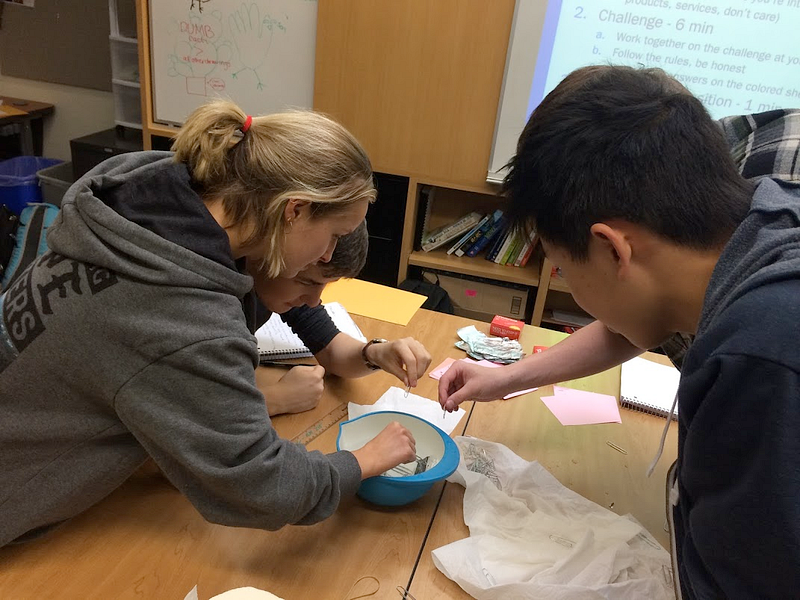
Instead of the year following one long, linear journey, students go through many fast iterations cycling through the design process. Each iteration is an opportunity for students to fail early, fail often, and fail forward. With embedded checkpoints for feedback, students build on their solution with feedback and insights from users, customers, and mentors.
Structuring the course as iterative cycles not only improves the startups but also students’ retention and depth of knowledge. By spiraling through the course material, students visit concepts over and over again, reinforcing these skills until they become second nature.
4. Authenticity
“You mean, we actually need to go talk to people?” Um, yes! So far in their educational careers, students have solved problems that are meaningful and engaging — like designing an earthquake resistant tower, or creating a camera for artists with disabilities — but within a controlled and imaginary context. And, as much as I tell students that they will be solving real problems in STEM Startups, they don’t seem to believe me. When I push them out of the classroom, they seem so shocked! All year long, students talk to real customers, interact with professional startup mentors, and pitch to actual investors. They start real startups.
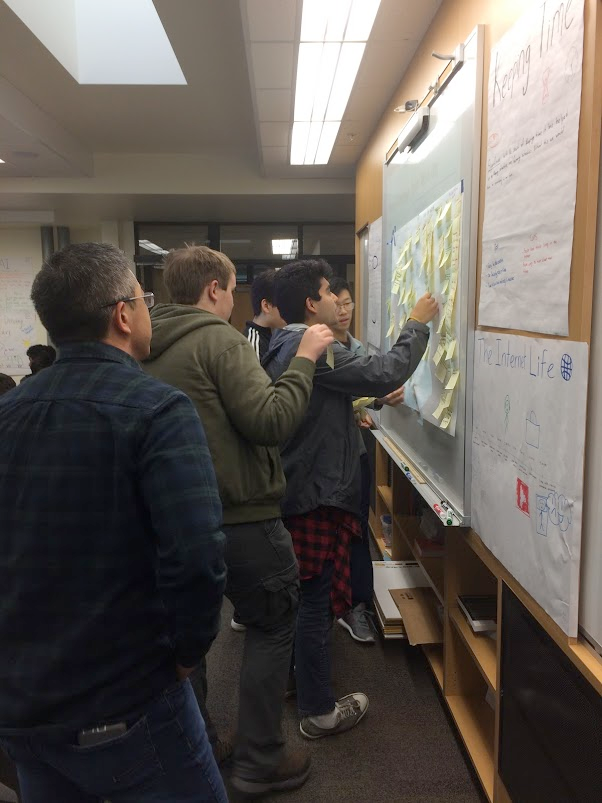
Authenticity also carries to how students do the work. When it is relevant and helpful for their startups, students use the same tools and frameworks that professionals use. For example, students used affinity mapping to understand and group customer needs after conducting customer interviews, and they use Kanban boards in Trello to manage their team and tasks.
5. Industry connections
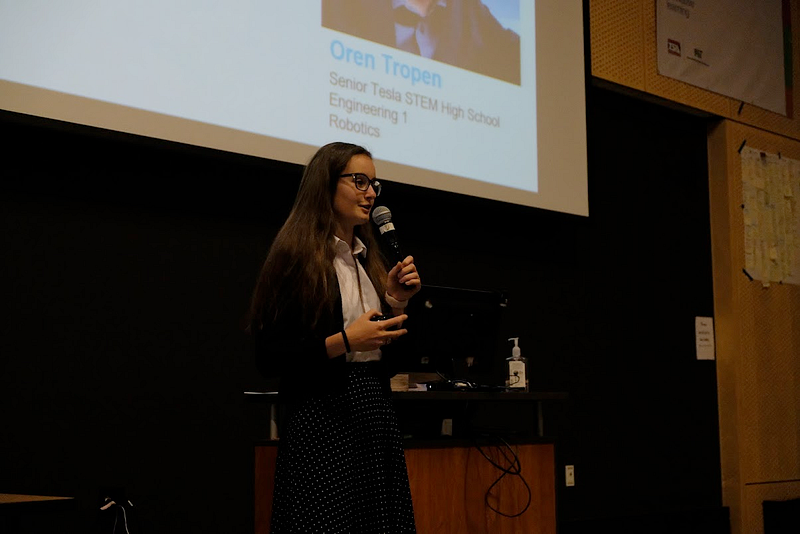
Lastly, the course could not be as engaging and successful without the village of people who support our young entrepreneurs. Industry experts come into my room as guest speakers, workshop facilitators, mentors, and judges. Guest speakers share stories and spark students’ curiosity about the future. Workshop facilitators introduce a specific topic to students and help them practice. Mentors work with students and teams 1:1 to answer questions and provide feedback. Judges provide feedback on formal presentations of student work.
Our industry partners come from a range of backgrounds, from design, engineering, business, and law. I meet professionals through startup events, education meetups, and our parents’ community. Industry professionals often share this opportunity with their colleagues, and once my students begin going to startup events themselves, they become the best recruiters for volunteers. I invite volunteers first to a showcase event like pitch day or a drop-in event like mentor sessions. Then, when we continue to work together, we’ll collaborate on a workshop or long-term mentoring for students.
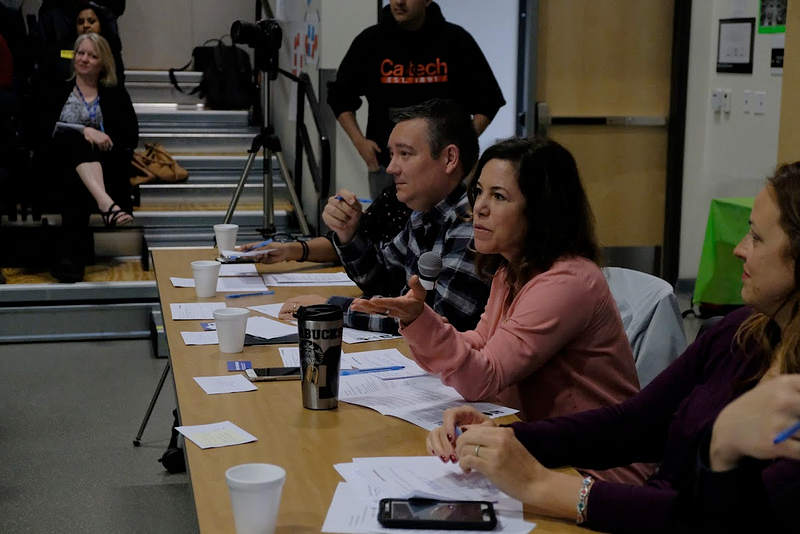
How do these connections between industry and education benefit all of us? As one visiting expert said, “Students get exposed to industry concepts early on, while industry ultimately gets better professionals who have the right mindset formed at the right time.” Plus, engaging with industry professionals exposes students to career possibilities they may have never imagined. In collaborating with educators and students, industry professionals also practice being better teachers and presenters, skills that translate back into the workplace as leaders and trainers. And, as a teacher, I stay up-to-date with best practices in industry that I share with my colleagues and students.

Empowering Tomorrow’s Entrepreneurs
What students accomplish always blows me away. Riceometer created an app that motivates people to exercise through donating food. Pacific Northwest Furniture restarted their startup 6 weeks before Demo Day to create beautiful, functional furniture from wood they reclaimed from junkyards and roadsides. And, our Audience Favorite team, DIVERS-TEM, developed and ran a series of ten workshops at three local middle schools to inspire more girls to pursue STEM. Swarathmika Kakivaya, who pitched the idea for DIVERS-TEM based from her own experiences as a girl at a STEM school, said about STEM Startups: “It wasn’t what I had to do for school, but what I wanted to do with life.”
Through this program, now in its second year, I’ve learned that when we value young minds and shape them early, when we create safe spaces for students to explore their passions and learn from failure, when we rally our communities to empower young people — high school students CAN change the world.
Video of the Presentation
Slides of the Presentation
About Melanie

High school STEM educator helping students create startups, co-founder/CEO of the education startup Floop, and former chemical engineer committed to improving STEM education in K-12 schools and developing creative solutions for problems in education
Core Competencies: Entrepreneurship education, project-based instruction, inquiry-based learning, curriculum development, standards-based grading, product development, R&D, user research, data analysis.